
Focus on Young Liberal Professionals.
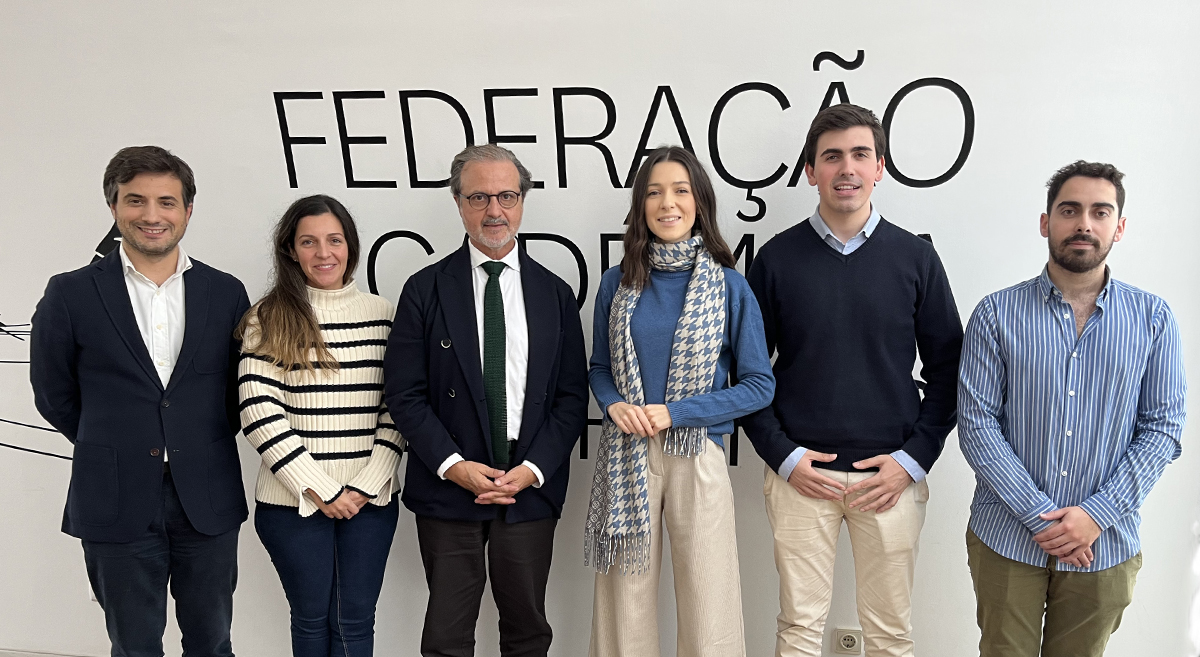
The National Association of Liberal Professionals was received at its request on November 15th by the Academic Federation of Porto (FAP), the largest in the country.
Representing ANPL were Orlando Monteiro da Silva, President, Artur Miler, a member of the Board, and Filipa Barbosa, a member of the General Assembly. On behalf of FAP, Gabriela Cabilhas, President, Carlos Alves, Vice-President, and Francisco Porto, a member of the Board, were present.
During a comprehensive meeting on common interests, issues related to self-employed liberal professional practice were discussed, including:
- The status of the student worker and the need to adapt it to the new realities of work;
- Taxation and social protection issues affecting self-employed student workers;
- Remote work of student workers and its framework;
- Paternity issues related to Young Liberal Professionals (YLP);
- FAP’s participation in the 2nd Liberal Professional Forum, scheduled for September 21, 2024, in Porto;
- European representation of YLP;
- Entrepreneurship and new skills suitable for the liberal exercise of professions;
- Specificities of artistic student workers;
- Access to credit for student workers and YLP;
- Issues of professional internships for access to professions and their framework;
- Foreign student workers and their specificity;
ANPL thus begins a consultation with representative organizations of students and young professionals in the field, particularly focused on YLP, thanking FAP for the added value of shared presentations.
Photo: from left to right, Artur Miler, Filipa Barbosa, Orlando Monteiro da Silva, Gabriela Cabilhas, Francisco Porto, and Carlos Alves.
About the Academic Federation of Porto
The Academic Federation of Porto (FAP), founded in 1989, is the representative interlocutor of the largest academy in the country. Its creation marked a new phase in the evolution of the associative movement, with FAP assuming itself as the coordinating body of the student cause and building the means for the union of its various associations.
Since then, associativism in Porto has expanded, generated dynamic effects, and formalized its action, with extremely positive impacts on the qualitative improvement of Higher Education and Society. The institution consists of 26 Student Associations, faithful guardians of the interests of their nearly 80,000 students, integrating the four existing subsystems of Higher Education in Portugal: Public University, Public Polytechnic, Private and Cooperative Education, and Concordat Education.
 Associação Nacional dos Profissionais Liberais